Commercial
Signs Your Commercial Property Needs Repainting
Commercial Property Repainting | Signs Your Building Needs New Paint
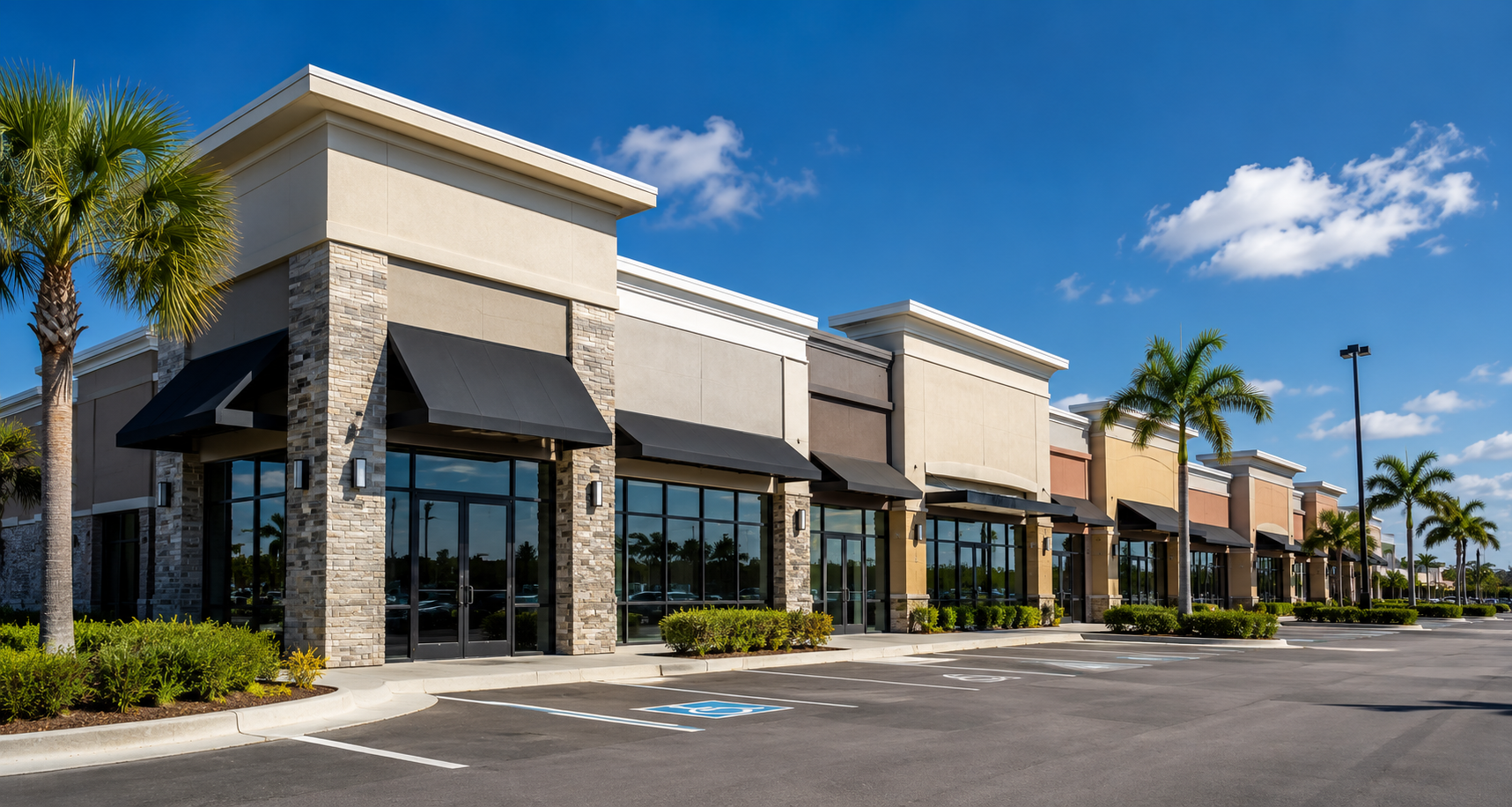
Commercial buildings rarely go from freshly painted to obviously worn overnight. The signs accumulate slowly — a chalky patch on the west elevation, a peeling corner on a canopy, mildew streaks along a downspout. By the time tenants or shoppers start noticing, the substrate is often already at risk. This guide covers the ten signs that mean a shopping center, office, warehouse, or plaza is due for repainting, and how each one connects to substrate protection and property value.
Fading and color loss
Fading is the first visible sign of UV damage. South and west elevations lose color first because they take the most sun. On branded properties — retail centers with corporate color palettes — fading also weakens brand recognition. When a building's south wall no longer matches the north wall, it is time to plan a repaint.
Peeling and bubbling
Peeling means adhesion has failed, usually because moisture is getting behind the paint film or the original prep was inadequate. Bubbling under the surface means moisture is actively trapped. Both are past the point of touch-ups; the affected areas need to be scraped, primed, and repainted, and the whole elevation should be assessed to catch failing sections before they spread. Our Exterior Painting service handles full elevation resets.
Water stains and rundown streaks
Rust-colored streaks below fasteners, dark stains under window frames, and vertical runs below scuppers all mean water is getting into a spot it should not. Left alone, these become stucco cracks, dry rot, or metal corrosion. Repainting alone will not solve the source, but sealing and repainting during a full project stops the visible damage from getting worse.

Chalky surfaces
Run a hand along a sunny elevation. If it comes back covered in a fine powder, the paint film is chalking — the binder has degraded and the pigment is releasing. Chalky surfaces cannot be recoated directly; they need a bonding primer or a full pressure wash and prep cycle before new paint will adhere.
Cracked stucco
Hairline cracks in stucco are expected in Florida — the material moves with temperature and humidity. Wider cracks indicate movement or moisture and need to be routed, caulked, and primed before any coating goes on. A repaint that skips crack repair guarantees the paint will crack in the same lines within 6–12 months. See our Stucco Painting service for the full crack-repair-and-elastomeric system.
Mold, mildew, and biological growth
Green, black, or gray streaks on shaded elevations are mildew, and mildew-resistant coatings lose effectiveness after 5–8 years. Once biological growth is visible, the surface needs a soft-wash with a mildewcide detergent, followed by a fresh mildew-resistant top coat.
Rust on metal surfaces
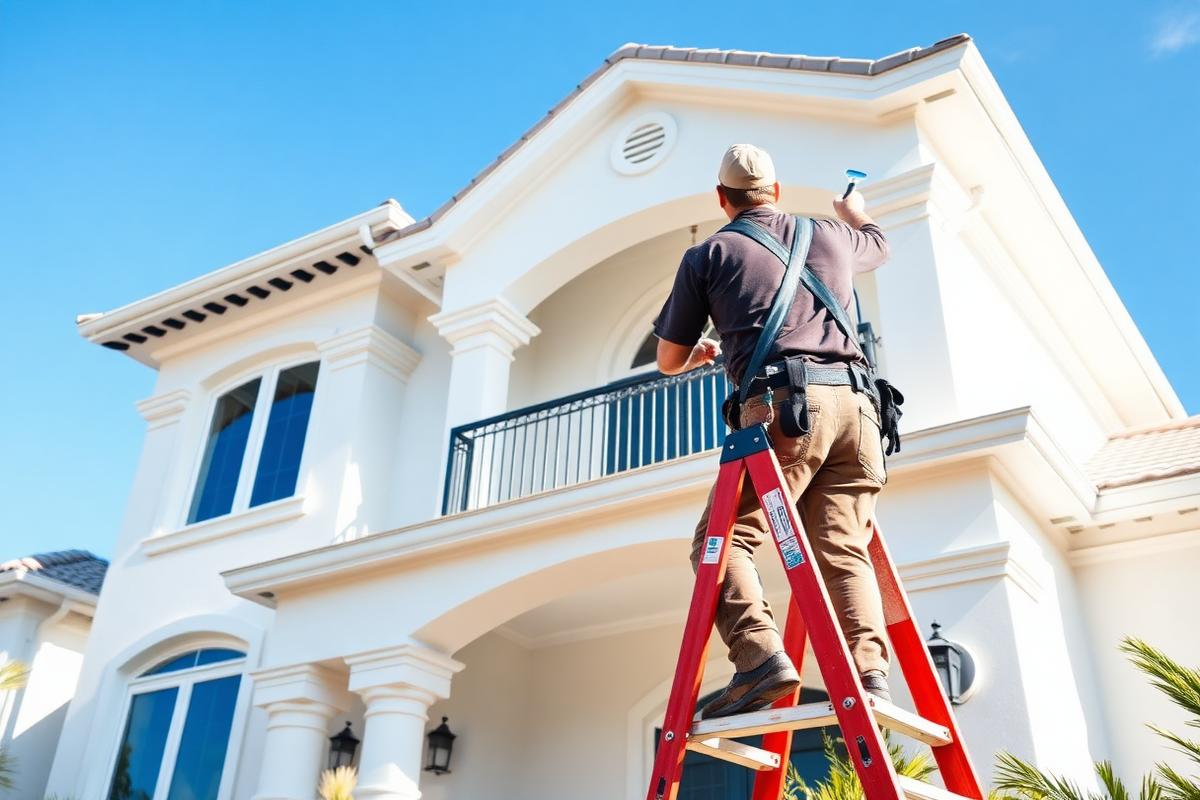
Rust on exposed fasteners, hollow metal doors, railings, or canopy trim is a failure of the primer beneath the top coat. Repair means sanding to sound metal, applying a rust-inhibiting primer, and top-coating with a durable enamel — not just painting over the stain, which will bleed through and return within weeks.
Inconsistent branding and portfolio drift
Property portfolios that were painted in different years often drift into slightly different shades of the same color. From the parking lot, a mismatched tenant panel or a re-touched entry is obvious. Portfolio owners with consistent brand standards schedule repaints across multiple properties in a single season to keep every location on-brand.
Tenant turnover and market positioning
Freshly painted buildings lease faster and hold higher rents. Prospective tenants and their designers assess the exterior long before they see the interior, and a chalky or faded facade signals deferred maintenance across the property. When a plaza starts seeing longer vacancy periods, an exterior refresh is often the highest-ROI move a property manager can make.
Property maintenance planning
Rather than repainting reactively, sophisticated property owners include exterior painting in a rolling 7–10 year maintenance plan, with elevation-by-elevation touch-ups every 2–3 years. This keeps every property on the portfolio looking current, avoids the disruption of a full multi-week repaint, and holds the substrate in protected condition. Our Commercial Painting, Retail Store Painting, Office Painting, and Warehouse Painting services all support scheduled maintenance programs.
Frequently asked questions
How often should a commercial exterior be repainted?+
Most South Florida commercial exteriors need a full repaint every 7–10 years, with touch-ups every 2–3 years on high-exposure elevations.
Can we spot-repaint a shopping center or does the whole property need to be done?+
Spot repainting is possible but rarely blends well after a few years of fading. Full-elevation repainting is usually the better long-term investment for branded properties.
Does peeling paint mean the substrate is damaged?+
Not always. Peeling can be a prep failure or a surface adhesion problem. But peeling in areas exposed to water can indicate moisture getting into stucco or wood — that needs to be evaluated before repainting.
How do we plan repaints across a portfolio?+
We work with property managers to build a rolling maintenance schedule that spreads repaints across seasons, keeps every property on brand, and prevents any one building from falling into visible decline.
What is the ROI on repainting a commercial building?+
Repainting typically shortens tenant lease-up times, supports higher rents, and protects the substrate from moisture and UV damage that would otherwise require far more expensive repairs.
Related services
Ready for a free painting estimate?
Licensed, insured, and backed by a written workmanship warranty. Get a free written estimate for your residential or commercial project.