Exterior
Choosing Exterior Paint for Florida Weather
Exterior Paint for Florida Weather | Sun, Rain and Humidity Protection
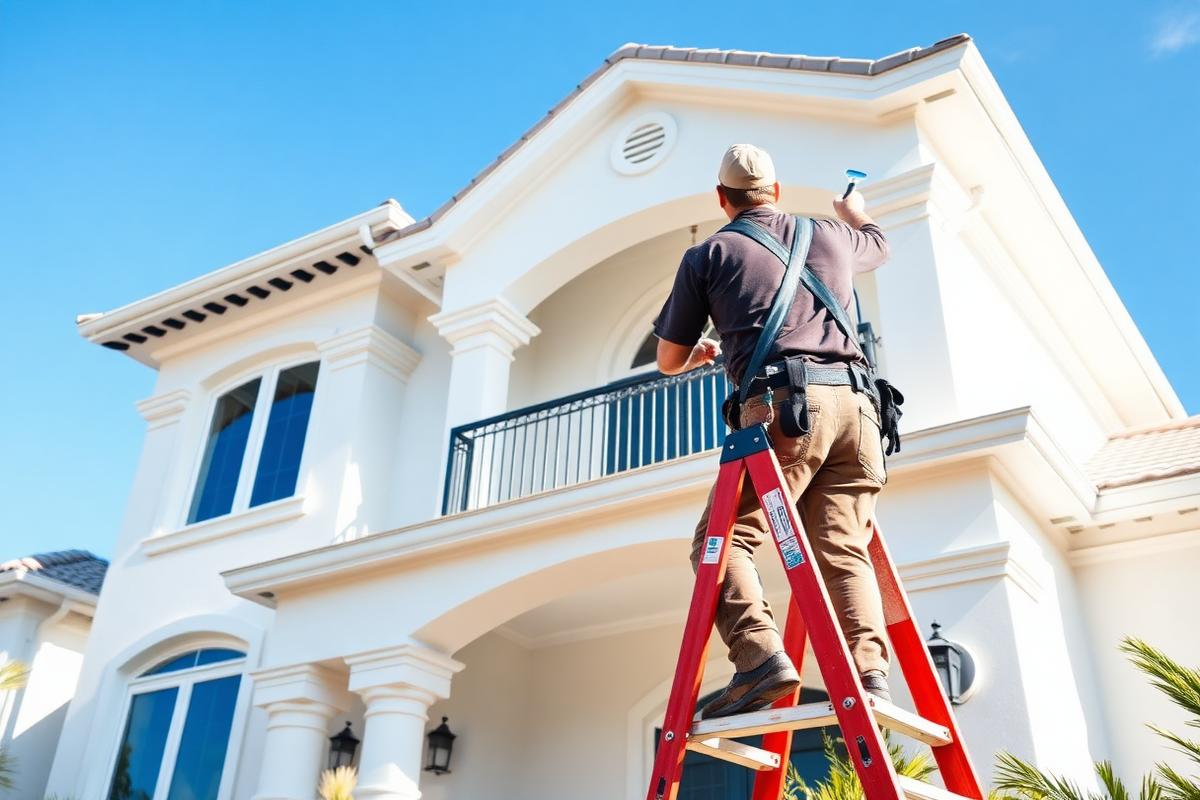
Choosing the right exterior paint for a Florida property is less about the brand on the can and more about the specific coating qualities that stand up to Florida's climate. UV, humidity, salt, and hurricane rain will all find the weakness in a cheap coating within a year. This guide focuses on the properties — not the brand names — that actually predict how a paint job performs in South Florida. Use it as a checklist when comparing quotes and product data sheets.
UV resistance and pigment quality
UV is the fastest destroyer of exterior paint in Florida. The paints that survive it use high-quality titanium dioxide pigment and UV-inhibiting resins that keep the polymer chains from breaking down. Look for 100% acrylic binders and datasheet language about UV stability. Deep or 'accent' bases fade fastest because they rely on organic tints — light and neutral colors on the same product line will hold color years longer.
Humidity and mildew resistance
Florida's constant humidity creates ideal conditions for mildew on shaded elevations, especially north-facing walls. Coatings marketed as mildew-resistant contain a fungicide that inhibits regrowth. That resistance wears off over 5–8 years, which is why periodic soft-washing is part of ongoing maintenance. A quality mildew-resistant exterior paint combined with annual cleaning keeps north walls looking clean rather than green.
Waterproofing and moisture management
Water gets into a Florida exterior from two directions — wind-driven rain from outside, and vapor from inside on air-conditioned buildings. The correct exterior coating repels liquid water while remaining permeable enough to let vapor escape. Coatings that fully seal in vapor cause blisters when interior moisture tries to escape. This is why fully waterproof films are the wrong answer for wood siding or breathable stucco.

Breathable coatings for stucco and masonry
Stucco and CMU masonry need to breathe. Coatings for these substrates are rated by perm (permeability) — the higher the perm rating, the more vapor can pass through the film. Elastomeric coatings sit at the low-perm end and are ideal only where hairline cracks need bridging; standard high-perm 100% acrylic paints are the right choice for most stucco. Our Stucco Painting service applies the right system based on wall condition, not a one-size-fits-all product.
Stucco-compatible paint
Not every exterior paint is compatible with stucco. Alkaline masonry destroys unprepared coatings — the paint saponifies and lifts off. A masonry-compatible primer neutralizes alkalinity and creates the bonding surface a top coat needs. Product data sheets rated for 'masonry, stucco, and concrete' spell this out; those rated only for 'wood and metal' are the wrong tool for a stucco elevation.
Masonry coatings and CMU block
CMU (concrete masonry unit) block walls, common on warehouses and lower elevations, benefit from a block filler applied before the top coat. Block filler fills the voids in the block face so the finish coat lays flat and reflects light evenly. Skipping filler gives a rough, pinholed appearance that traps dirt and shortens the life of the paint.
Coastal exposure and salt-air performance
Properties within a few miles of the ocean or Intracoastal need coatings rated for salt exposure. Salt is hygroscopic and pulls moisture against the wall, so paints on coastal properties should combine high UV resistance, mildew resistance, and adhesion to slightly damp substrates. Rust-inhibiting primers on all exposed metal — fasteners, brackets, railings — are non-negotiable on the coast.
Primers, application, and long-term maintenance
Primer selection is as important as top coat. Chalked stucco needs a bonding primer; bare wood needs an oil stain-blocker; metal needs a rust inhibitor. Two coats of top paint at the correct spread rate deliver the mil thickness the manufacturer warranties. After the project, annual soft-washing and periodic touch-ups keep the paint job at peak protection. See our Exterior Painting, Commercial Painting, Residential Painting, and Pressure Washing services for how coating selection ties into the full system.
Frequently asked questions
Are premium exterior paints worth it in Florida?+
Yes. The extra cost of a quality 100% acrylic paint is paid back in years of additional service life. Cheap contractor-grade exteriors often fail within 3 years in South Florida.
Is elastomeric paint always the right choice?+
No. Elastomeric is excellent over cracked stucco but its low permeability can trap moisture on other substrates. Use it selectively where movement is expected, not as a default.
How do I know if a paint is UV-stable?+
Check the product data sheet for UV resistance, expected color retention, and warranty terms. Any exterior paint with a warranty under 10 years is not built for Florida sun.
Do I need a different paint for coastal homes?+
You need the same base chemistry — 100% acrylic — but with higher-grade mildew resistance and a rust-inhibiting primer under every exposed metal fastener.
How long between coats?+
Most acrylic exteriors recoat in 4 hours in low humidity. In Florida's humidity, waiting 24 hours between coats is safer and dramatically improves adhesion.
Related services
Ready for a free painting estimate?
Licensed, insured, and backed by a written workmanship warranty. Get a free written estimate for your residential or commercial project.