Exterior
Exterior Painting in South Florida
Exterior Painting South Florida | Protecting Homes and Commercial Properties
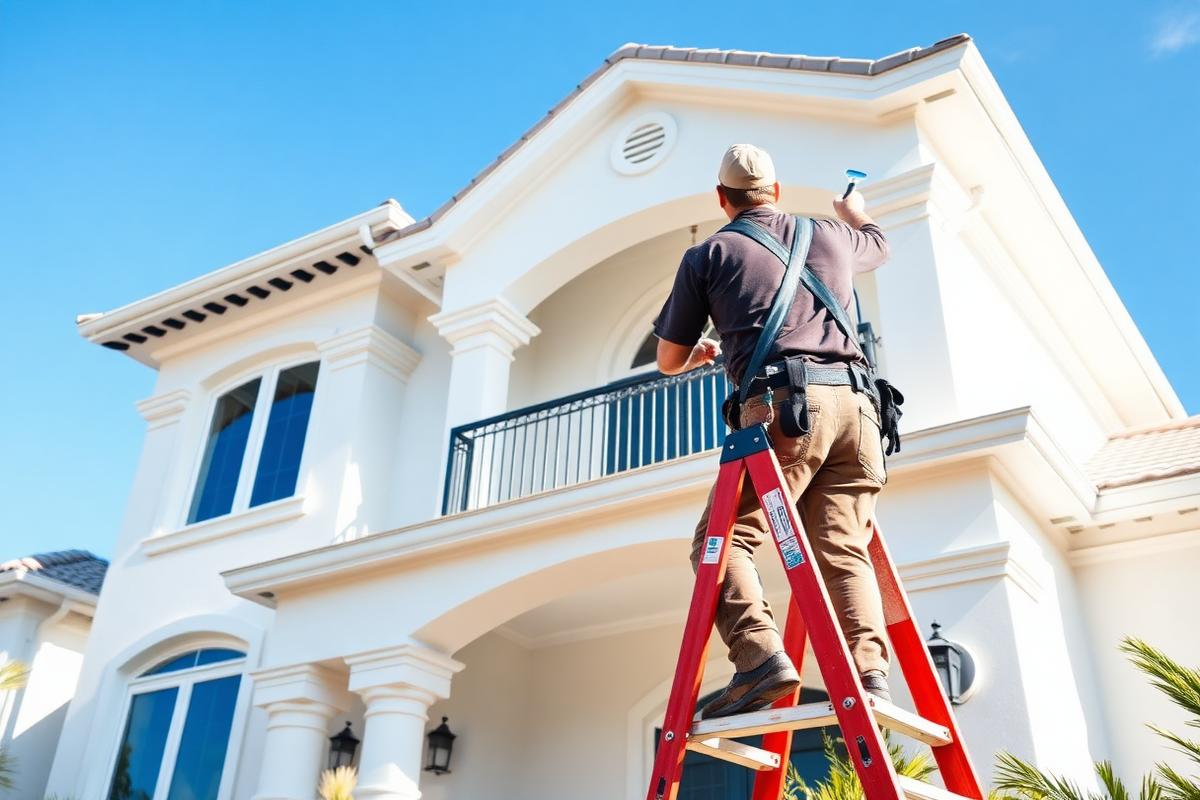
Exterior painting in South Florida is not a cosmetic project — it is a protective system that has to survive some of the harshest coating conditions in the country. Between year-round humidity, punishing UV, tropical rain, and salt-laden coastal air, every exterior surface is under constant attack. A properly painted home or commercial building repels moisture, resists mildew, and reflects heat; a poorly painted one begins to chalk, peel, and lose curb appeal within a year. This guide walks residential and commercial property owners through what actually matters in a South Florida exterior paint job — from climate stressors, through surface preparation, to the coating systems that hold up.
Florida sun exposure and UV breakdown
South Florida receives some of the most intense ultraviolet radiation of any U.S. region, and UV is the number-one destroyer of exterior paint. Ultraviolet light breaks the polymer chains that give coatings their flexibility and color, causing chalking, fading, and eventual cracking. South-facing and west-facing elevations take the brunt of it, which is why those sides usually fail first. Modern 100% acrylic exterior paints with UV-inhibiting resins hold color and flex for years longer than budget alkyd coatings. Choosing a paint with high volume solids and quality titanium dioxide pigment is not marketing — it is what stands between a fresh finish and premature failure.
Heavy rain, humidity, and dew point
Florida averages more than 60 inches of rain a year, and even on 'dry' days relative humidity often sits above 70%. Paint cures by evaporating water or solvents into the air — when the air is already saturated, cure times stretch and adhesion suffers. Professional crews track dew point, not just temperature, and they will not spray or roll a top coat when the surface temperature is within 5°F of the dew point. Coatings applied to damp stucco or trapped moisture in wood will blister within weeks. Scheduling around Florida's afternoon storm pattern is a craft skill in itself.
Salt-air and coastal exposure
Any property within a few miles of the Atlantic or Intracoastal is under constant salt-spray attack. Salt is hygroscopic — it pulls moisture out of the air and holds it against the substrate, which accelerates mildew growth and corrodes exposed metal fasteners, brackets, and railings. On coastal projects we specify a rust-inhibiting primer over every metal fastener and we insist on annual soft-washing to remove the salt film. Coastal-grade acrylic coatings with elastomeric characteristics flex through thermal cycling without cracking around salt-corroded fastener heads.

Stucco and masonry preparation
Stucco is South Florida's dominant exterior substrate, and painting it correctly is a specialty. Fresh stucco must cure a minimum of 28 days before painting, and hairline cracks under 1/16" should be bridged with an elastomeric coating rather than skimmed over. Wider cracks need to be routed out, caulked with a paintable urethane sealant, and primed with a masonry-specific primer that neutralizes the alkalinity of the cement. Existing stucco walls that have chalked need an acrylic bonding primer; skipping that step is why so many repaints peel in sheets. For deeper repairs and coatings, our Stucco Painting service covers the full elastomeric system.
Surface cleaning and pressure washing
Pressure washing is non-negotiable before any Florida exterior paint job. Mildew, algae, chalking, and salt film all destroy adhesion, and no coating — regardless of price — sticks to a dirty surface. A professional wash uses low pressure and a mildewcide detergent that kills spores at the root rather than just blasting them off. After washing, the substrate needs 24–48 hours of drying time before priming. Our Pressure Washing Before Painting service is included on every exterior project because skipping it guarantees premature failure.
Priming and weather-resistant coating systems
Primer is the workhorse of an exterior system. On chalked stucco we use a masonry bonding primer; on bare wood we use an oil-based stain-blocker; on metal we use a rust-inhibiting primer. Top coats should be 100% acrylic with high volume solids, mildew resistance, and UV-inhibiting pigments. Two coats — not one heavy pass — deliver the mil thickness the manufacturer warranties. Elastomeric coatings are used selectively over cracked stucco because they bridge hairline movement, but they are not appropriate for wood or trim, where breathability matters more than elasticity.
Residential and commercial applications
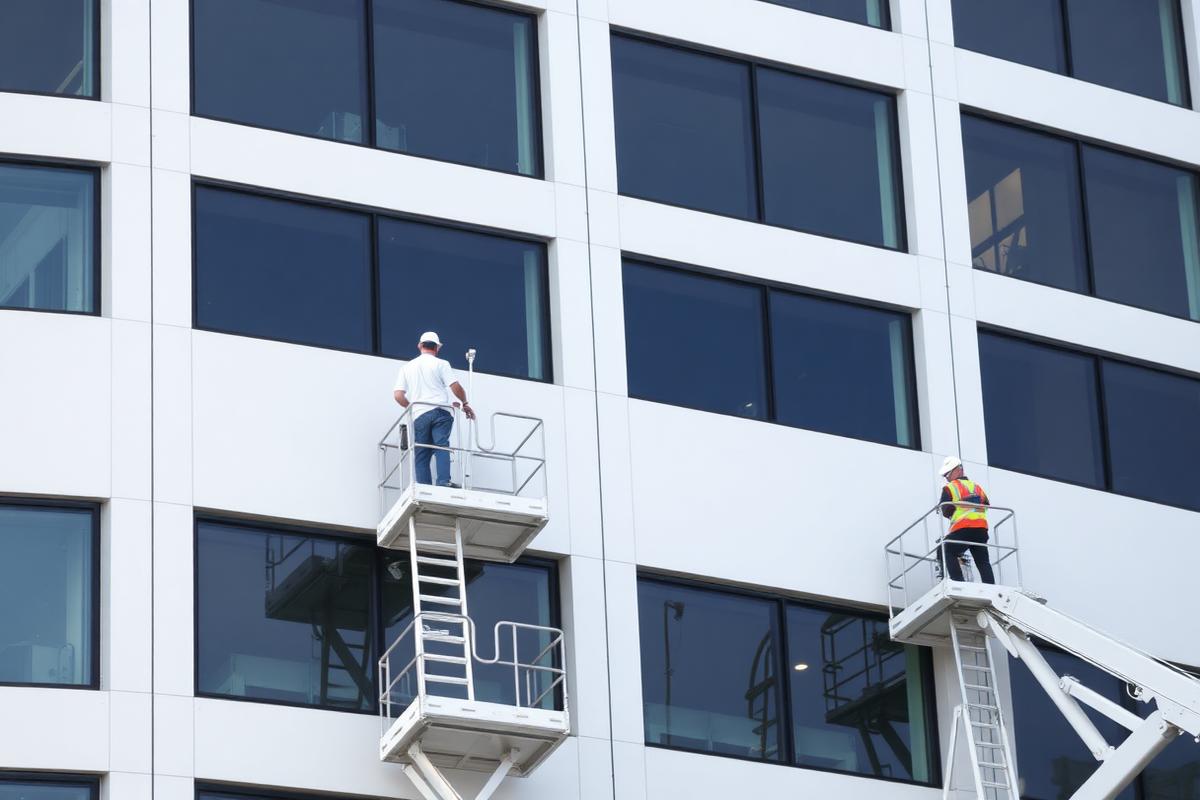
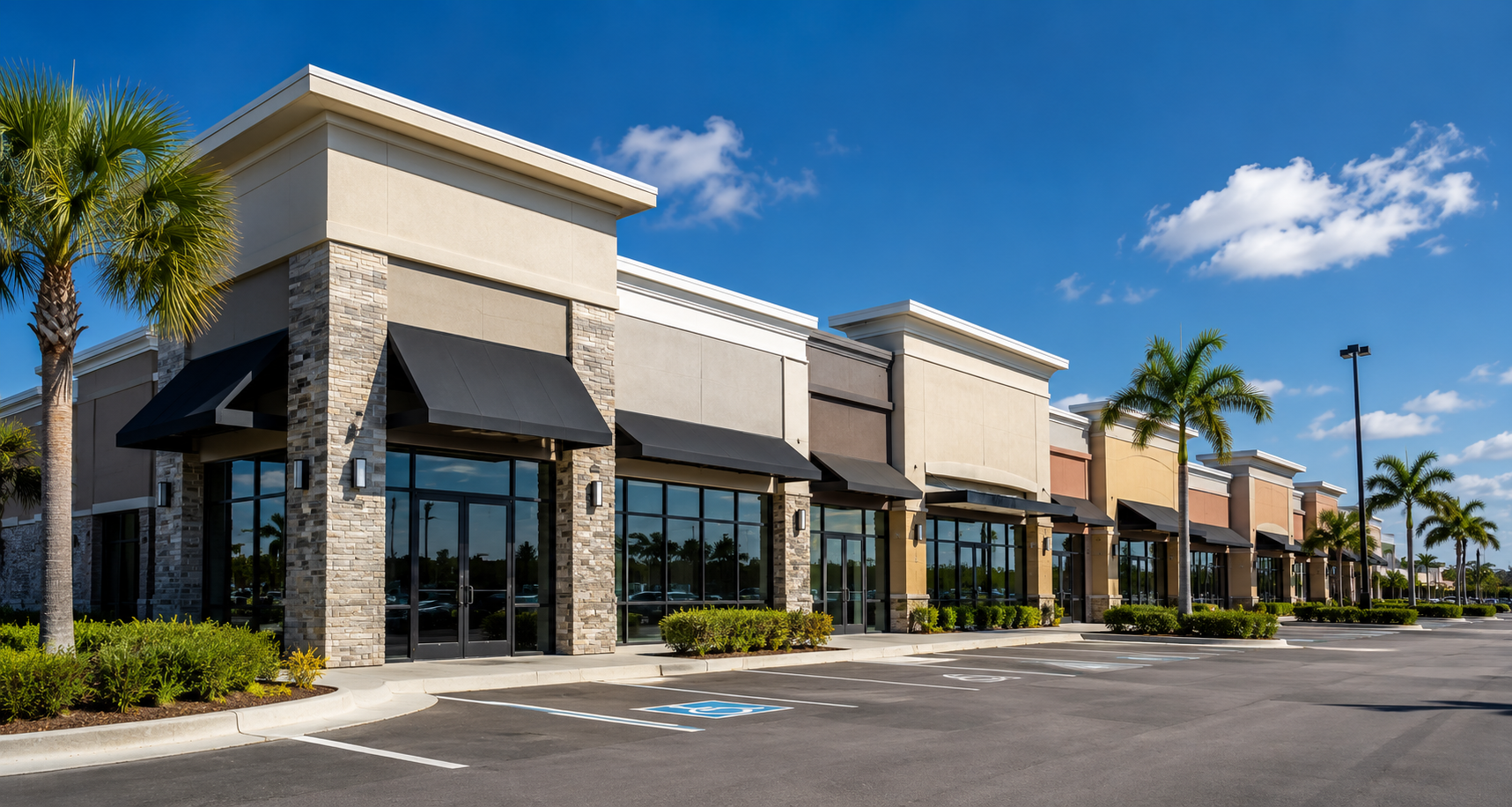
The prep-and-coating principles are the same for residential and commercial properties, but the scheduling and access requirements differ. On homes we work around family life, drop cloth landscaping, and stage the job in elevations. On commercial buildings — shopping centers, offices, warehouses — we work around tenant hours, phased around signage and store entries, often overnight or on weekends. Both project types benefit from the same fundamentals: pressure washing, real primer, two coats, warranty. See our Residential Painting and Commercial Painting service pages for how we handle each.
Exterior maintenance after the project
A properly painted South Florida exterior should look fresh for 7–10 years — but only if it is maintained. Annual soft-washing removes mildew and salt film. Quick touch-ups on chipped trim or fastener heads prevent moisture intrusion. Caulk joints should be inspected every two to three years and refreshed as needed. Property owners who commit to a light annual cleaning routine consistently double the life of their paint compared to those who ignore it until they see visible failure.
Frequently asked questions
How long does exterior paint last in South Florida?+
A properly prepped and painted South Florida exterior lasts 7–10 years on stucco and 5–8 years on wood trim. Coastal properties on the ocean-facing side often need attention 1–2 years sooner.
What is the best time of year to paint an exterior in South Florida?+
October through May is the ideal window — lower humidity, fewer storms, and stable dew points. Summer projects are possible but require careful scheduling around afternoon rain and higher humidity.
Do you need to pressure wash before painting?+
Yes. Pressure washing removes mildew, salt, chalking, and dust that destroy paint adhesion. Skipping it guarantees premature peeling regardless of coating quality.
How do you paint stucco with hairline cracks?+
Hairline cracks under 1/16" are bridged with an elastomeric coating. Wider cracks are routed, caulked with a paintable urethane sealant, primed, and top-coated.
Is elastomeric paint always the right choice for Florida?+
No. Elastomeric is excellent over cracked stucco, but it can trap moisture on wood and some masonry. A good contractor specifies elastomeric where movement is expected and standard acrylic where breathability matters.
Related services
Ready for a free painting estimate?
Licensed, insured, and backed by a written workmanship warranty. Get a free written estimate for your residential or commercial project.